Attic Insulation Cost Guide: What Villa Park Homeowners Pay in 2026
In 2026, attic insulation in Villa Park runs roughly $1,800 to $6,500 for a typical 1,500 to 2,500-square-foot home, with most projects landing between $2,400 and $4,200. The spread comes down to material choice, R-value target, and whether air sealing is part of the job. If you’d rather skip the math and talk to someone who prices this work daily, call (833) 589-8312 for a free estimate.
Now here’s what nobody tells you when you start collecting bids: two neighbors on the same street can get quotes for the “same” attic job that are $1,500 apart, and neither contractor is being dishonest. One quote includes air sealing, baffle installation, and removal of the 1970s fiberglass that’s compacted to half its original depth. The other assumes you just want fresh insulation blown over the old stuff. Same house, same attic, completely different projects. That’s the part most cost guides gloss over, and it’s the part that determines whether you actually solve your comfort problem or just spend money on a temporary improvement.
Key Takeaways:
- Blown fiberglass runs $1.10 to $1.80 per square foot; blown cellulose $1.20 to $2.00; spray foam $2.50 to $5.50 depending on open- vs. closed-cell
- Air sealing and attic prep typically add $600 to $1,200 and are the highest-ROI line item in the project
- Old insulation removal costs $1.00 to $1.75 per square foot and is necessary when the existing material is compacted, damp, or rodent-damaged
- Villa Park’s 1960s-1980s housing stock brings specific labor considerations: lower clearances, tile-roof heat, and occasional legacy wiring that affects installation approach
- An apples-to-apples quote request takes 10 minutes to write and saves you from comparing scopes that aren’t the same job
What Attic Insulation Costs Per Square Foot in Villa Park in 2026
Let’s talk numbers, because “it depends” isn’t useful when you’re budgeting. In Southern California’s labor market, here’s what we’re seeing for attic insulation in Villa Park across the three main material categories in 2026:
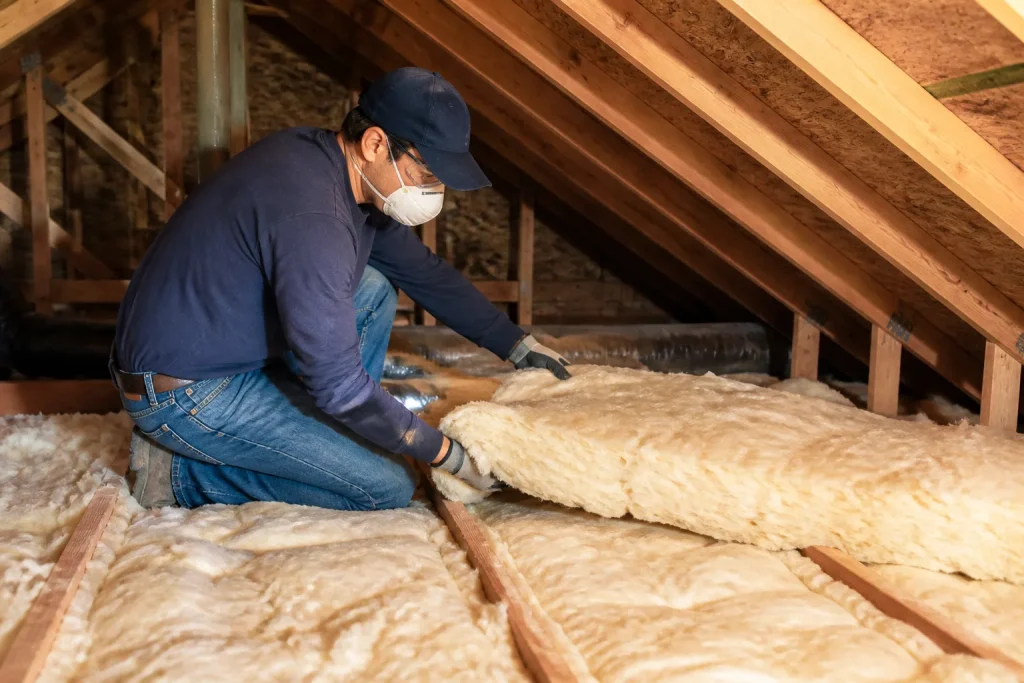
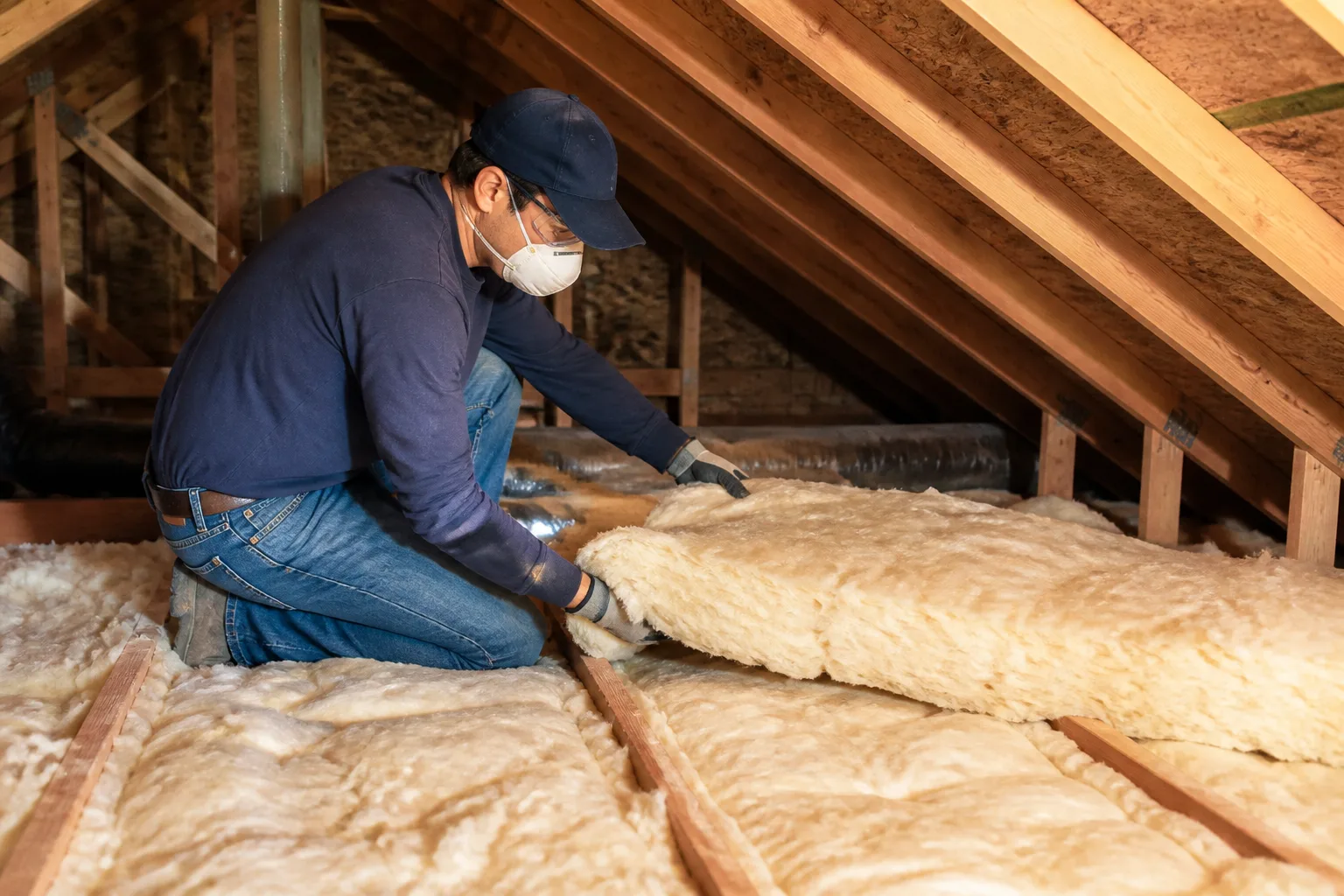
- Blown fiberglass (Owens Corning or Johns Manville): $1.10 to $1.80 per square foot for R-30 to R-38 depth. A 1,800-square-foot attic lands around $2,000 to $3,200.
- Blown cellulose (GreenFiber): $1.20 to $2.00 per square foot for R-30 to R-38. Slightly higher material density means better air-blocking performance than fiberglass at the same R-value, and the cost difference is modest.
- Spray foam, open-cell (Icynene or Demilec): $2.50 to $4.00 per square foot for R-20 to R-25 depth. This is the choice when air sealing is the priority and you want the attic conditioned as part of the home’s envelope.
- Spray foam, closed-cell (Icynene or Demilec): $4.00 to $5.50 per square foot for R-28 to R-35. Highest cost, highest R-value per inch, and a vapor barrier built into the material. Overkill for some attics, exactly right for others.
Those ranges assume a clean, accessible attic with standard ceiling heights. Villa Park homes east of the 55 have their share of low-slope roofs and tight attic clearances, which can push labor time up by 15 to 25 percent compared to a newer tract home with a broad, walkable attic.
One thing worth knowing: R-value is not the only number that matters. Two materials at R-38 perform differently in an Orange County summer. Fiberglass loses effective R-value as attic temperatures climb past 130 degrees, which happens routinely under a Villa Park tile roof in August. Cellulose holds its performance better in heat, and spray foam doesn’t degrade thermally at all. That’s why we don’t default to one product, we match the material to the attic and the climate reality above it.
The Five Scope Variables That Make Quotes Impossible to Compare
Here’s the thesis of this entire guide: attic insulation quotes in Orange County vary by 40 to 60 percent not because contractors are inflating prices, but because they’re pricing different jobs. When you ask for “attic insulation,” the contractor fills in the blanks with his own assumptions. Those assumptions are where the money hides.
Five variables decide whether your $2,500 quote and your neighbor’s $4,200 quote are even the same project:
- Old insulation removal. If your attic has compacted, dusty, or rodent-soiled material from a 1970s install, removing it costs $1.00 to $1.75 per square foot before new insulation goes in. Some contractors skip removal entirely and blow over the top, which buries the problem and can trap moisture against your ceiling. A quote that skips removal will always look cheaper.
- Air sealing. This is the sleeper item. Sealing top plates, wire penetrations, can lights, and plumbing chases before insulation goes in typically adds $600 to $1,200 to the job, and it’s the single highest-return dollar you’ll spend in the whole project. Insulation slows heat transfer. Air sealing stops conditioned air from escaping through gaps. You need both, and the cheapest quote usually omits the sealing.
- Baffle installation. Attic ventilation depends on soffit vents staying clear. When insulation gets blown to the roofline without baffles, it blocks the airflow and your attic cooks. Installing baffles runs $15 to $30 each, and a typical Villa Park attic needs 12 to 20 of them. It’s a line item that separates a complete job from a shortcut.
- HVAC duct inspection. If your ducts run through the attic, they’re living in the hottest part of your house. A contractor who checks duct condition, seals visible joints, and recommends insulation depth accordingly is doing a different job than one who never looks at them. This inspection costs little or nothing but changes the outcome significantly.
- Haul-away and disposal. If old insulation is removed, it has to go somewhere. Disposal fees, truck time, and landfill costs add $200 to $400 to a removal job. Quotes that don’t mention haul-away are probably not removing anything.
When we estimate an attic job in Villa Park, the first thing we do is get into the attic and see what’s actually up there. Not every attic needs all five of these items. But you can’t know which ones you need without looking, and you can’t compare quotes without knowing which items each contractor included.
Why Villa Park’s Older Housing Stock Changes the Labor Math
Villa Park was largely built out between the early 1960s and late 1980s. That’s a specific era of construction, and it brings specific conditions to an attic insulation project that a newer tract home simply doesn’t have.
First, lower attic clearances. Homes built in that period often have roof pitches designed more for looks than for attic access. Installers spend more time working in cramped conditions, which slows the job and adds labor cost. It’s not a penalty fee, it’s physics.
Second, legacy wiring. A meaningful number of Villa Park homes from the 1960s still have original wiring runs through the attic, and some have knob-and-tube remnants that were abandoned in place rather than removed. Insulation can’t be blown over live knob-and-tube, and even abandoned runs affect how and where installers work. Any contractor quoting over the phone without checking for this is guessing.
Third, tile roof heat. Villa Park has a lot of concrete and clay tile roofs. They look great and they last, but they hold heat like a pizza oven. In August, attic temperatures under a tile roof can climb 20 to 30 degrees hotter than under composition shingles. That means installers work in genuinely dangerous heat for a portion of the year, and it means your insulation’s thermal performance matters more. Choosing a material that maintains R-value at high temperatures, like cellulose or spray foam, has an outsized payoff under a tile roof.
The Cheapest Quote Usually Skips the Most Important Step
We’ll say it plainly because it’s the most common mistake we see in Villa Park: the cheapest quote frequently reflects a scope that skips air sealing, and air sealing is the highest-ROI step in the entire project.
Here’s why. Your attic insulation works by trapping still air. Air sealing works by preventing your conditioned indoor air from leaking into the attic through gaps around light fixtures, wiring, and framing joints. You can blow R-49 over a leaky attic and still lose a third of your HVAC output through gaps the size of a dinner plate when you add them all together.
A project that includes air sealing costs more upfront, sometimes 15 to 25 percent more. But it typically cuts energy loss in a way that insulation alone cannot match. If you have to choose between deeper insulation and air sealing, take the air sealing every time. The good news is you rarely have to choose. A well-scoped project does both, and it’s still usually under $5,000 for a typical Villa Park home.
When to call a pro: Attic work involves navigating around wiring, working in heat, and moving through tight spaces where a misstep means a foot through the ceiling below. If your attic has old wiring, vermiculite, or you simply don’t want to spend a Saturday in a 140-degree crawlspace, this is the moment to get help. We’ve pulled enough compacted fiberglass out of Villa Park attics to know this trade rewards experience. If you’d like eyes on your attic before you commit to a scope, call (833) 589-8312 and we’ll take a look.
How to Request an Apples-to-Apples Quote in Villa Park
If you’re going to collect three bids, and you should, the goal is to make sure all three contractors are pricing the same scope. That doesn’t happen by accident. It happens by writing a request that removes the blanks.
Here’s the request we’d suggest sending to any contractor you’re considering. It works whether you’re calling or emailing, and it takes about 10 minutes to put together:
- State the address and house age. “Villa Park home built in 1975, single story, roughly 2,100 square feet.” This lets the contractor know what era of construction to expect without a site visit.
- Describe the current attic insulation. “Existing fiberglass batts, appears original or very old, compacted to about 4 inches in some areas.” This flags potential removal work.
- Request a specific scope. “Please quote new insulation to R-38, including air sealing of all top plates, penetrations, and can light housings, plus baffles at all soffit vents.” This is the sentence that forces every contractor to price the same job.
- Ask if old insulation removal is recommended. “If you recommend removal of the existing material, please line-item it separately.” Separating removal from new insulation lets you compare the base numbers directly.
- Request a material recommendation. “Please specify what material and brand you recommend for this attic, and why.” If you only get product names with no reasoning, that tells you something. A contractor who can explain why GreenFiber cellulose beats fiberglass under your tile roof, or why an Owens Corning blown fiberglass at R-38 is the right value play, is doing real assessment rather than selling inventory.
We’re material-agnostic by design. Meadow Insulation installs products from eight manufacturers, including Owens Corning, Johns Manville, GreenFiber, and Knauf, because no single product is right for every attic in Villa Park. The house dictates the material. When a contractor pushes one product for every job, ask what else they carry. If the answer is nothing, you’re not getting a recommendation, you’re getting a brand rep.
For more on how we approach attic work specifically in your area, see our Attic Insulation in Villa Park page. If blown-in material is the right fit for your attic, our Blown In Insulation in Villa Park page covers the method in detail. And if you’re weighing whether spray foam is worth the premium, the Spray Foam Insulation in Villa Park page walks through both open-cell and closed-cell options from Icynene and Demilec.
The Bottom Line
Attic insulation in Villa Park costs $1,800 to $6,500 in 2026, depending on material, R-value, and scope. The projects that actually solve comfort and energy problems are the ones that include air sealing, proper baffles, and an honest assessment of whether old insulation should come out. Those projects cost more than the stripped-down quotes, and they deliver results the cheap scope cannot.
The way to protect yourself is not to chase the lowest number. It’s to define the scope before the bids come in, then compare line items instead of totals.
If you’re in Villa Park and want a scope that’s honest about what your attic needs, Meadow Insulation offers free estimates. Call (833) 589-8312 and we’ll get into the attic, tell you what’s actually up there, and price the job so you know exactly what you’re paying for. No pressure, no product pitch. Just a clear picture and a number that means something.
Frequently Asked Questions
Most attic insulation projects in Villa Park run between $2,400 and $4,200 for a typical home, with blown fiberglass starting around $1.10 per square foot and spray foam running $2.50 to $5.50 per square foot. The final number depends most on whether the scope includes air sealing, old insulation removal, and baffle installation. Call (833) 589-8312 for a free quote specific to your attic.
You don’t really “repair” attic insulation. If it’s compacted, damp, or animal-damaged, replacement is the only fix that restores performance. Blowing new material over compromised insulation traps the problem underneath. Removal and replacement costs more upfront but solves the issue permanently. For most Villa Park homes with original 1970s insulation, replacement is the right call.
Air sealing as part of an attic insulation project typically adds $600 to $1,200 depending on attic size and the number of penetrations. It’s the highest-ROI line item in the project, because it stops conditioned air from escaping through gaps that insulation alone can’t address. If a quote seems remarkably low, check whether air sealing is included. Call (833) 589-8312 and we’ll tell you whether your attic needs it.
Yes, most straightforward blown-in insulation jobs are completed in a single day, including setup and cleanup. Spray foam takes longer because of application and curing time. Attics requiring old insulation removal or extensive air sealing may take two days. Schedule a free estimate by calling (833) 589-8312 and we’ll give you an honest timeline.
For Orange County’s climate, R-38 is the practical target for most attics, matching current code guidance for our zone. Higher R-values deliver diminishing returns unless you’re running heavy air conditioning or have specific comfort problems. The material you choose matters as much as the number, because fiberglass loses effectiveness in the high heat of a Villa Park tile roof attic while cellulose and spray foam hold their performance better.
Written by the team at Meadow Insulation, serving Villa Park since 2016.
Need Insulation Help?
Call Meadow Insulation — licensed & insured, here with fast after-hours help in Villa Park.
(833) 589-8312