Emergency Attic Insulation Near Me: What Villa Park Homeowners Should Do First
If you’re searching “emergency attic insulation near me” in Villa Park, here’s the honest answer: most insulation problems are not true same-day emergencies, and the fastest fix is rarely the right one. What you need today is a plan, not a rushed install. If you’ve got water actively coming through your ceiling or exposed wiring in the attic, call a pro immediately at (833) 589-8312. Otherwise, take one hour to read this, check three things, and then make a call that won’t cost you twice.
The search itself peaks in Orange County during two windows: the first cold snap in November and the first triple-digit day in June. Both moments share something uncomfortable in common. They’re when homeowners make expensive decisions they regret by the following season. Villa Park’s older ranch-style homes, many built between 1960 and 1980, rarely had adequate attic insulation to begin with. Add decades of settling, pest intrusion, and a few HVAC retrofits, and you’ve got ceilings that read like sieves on a thermal camera. We’ve crawled through enough Villa Park attics to know the difference between an emergency and an inconvenience. Here’s how to tell which one you’re dealing with.
Is This Actually an Emergency? The 3-Question Triage
Before you let a 24-hour contractor start drilling, ask yourself three questions. They’ll save you from paying emergency pricing for what should be a scheduled job.
1. Is water involved right now?
Active water intrusion is the one scenario where speed actually matters. If you’ve got a roof leak, a burst pipe, or condensation pooling on your attic floor, the insulation is absorbing moisture and losing its R-value by the hour. Wet fiberglass batts compress and hold water against ceiling drywall. Wet blown-in cellulose clumps and settles unevenly. This is a genuine problem that needs attention within days, not weeks. But even here, the correct move is to stop the water source first. Insulation installed before the leak is fixed is insulation you’ll be replacing twice.
2. Is this a new problem, or did you just notice it?
Villa Park homes show their insulation gaps most dramatically during temperature extremes. A bedroom that’s always been 5 degrees warmer than the rest of the house in August is not an emergency in June. It’s a pre-existing condition you’re now motivated to fix. That’s fine. Motivation is good. But it means you have time to get multiple quotes, compare materials, and schedule the work on a normal timeline. The urgency you’re feeling is discomfort, not damage.
3. Can you see exposed attic floor or missing insulation?
If you recently had HVAC work done, cable installed, or a bathroom fan replaced, there’s a good chance someone moved insulation aside and never put it back. In Villa Park, where many homes have shallow attic clearances, technicians often shove batts to one side to reach ductwork. The result is a bare patch of drywall between your living room and a 140-degree attic in July. This is a real problem, and it’s one of the few cases where a targeted same-day fix can make immediate sense. But it’s also a small job, not a full re-insulation. Beware the contractor who tries to turn a 20-square-foot bare patch into a $6,000 full-attic replacement.
What You Can Do Today, Before Anyone Shows Up
While you’re scheduling estimates, there are three interim steps that genuinely reduce heat transfer and improve comfort in a Villa Park home. None of them require a contractor, and all of them improve the performance of whatever insulation you eventually install.
- Cover the attic hatch. The pull-down staircase or hatch panel in your hallway ceiling is an uninsulated hole in your conditioned envelope. In Villa Park’s summer heat, attic air pours through the gaps around it. A $30 foam hatch cover kit from a local hardware store, installed in 20 minutes, can drop hallway temperatures noticeably. We’ve measured 10-degree differences at the hatch itself. This is the single highest-impact temporary fix for the money.
- Run ceiling fans counterclockwise and change your HVAC filter. A clogged filter forces your air handler to work harder, which means longer run times and more hot attic air being pulled into the ducts. A clean filter plus proper air circulation makes any insulation perform better. If you haven’t changed the filter since winter, do it today.
- Close blinds on west-facing windows after noon. Villa Park afternoons get direct sun. Radiant heat coming through glass is a separate problem from attic heat, but it compounds the same discomfort. Reducing solar gain inside the living space buys you time while you address the attic above it.
Red Flags in an Emergency Insulation Quote
When you call a contractor at 8 p.m. and someone offers to start tomorrow morning, your caution should spike. Not because fast response is bad. Because fast installation of the wrong product is expensive to undo. Here’s what to watch for in Villa Park specifically.
Skipped permits. Most attic insulation work in Orange County does not require a building permit, but significant air-sealing work or structural changes sometimes do. A contractor who dismisses the question with “don’t worry about it” hasn’t checked. You want someone who knows the answer, not someone who avoids it.
No post-install depth verification. Fiberglass blown-in insulation settles, and installers who rush a job often under-fill. Ask before the job starts: “How will you verify R-value depth when you’re done?” The right answer involves depth markers, a measured card, or a photo showing the ruler standing in the material. A shrug is not an answer.
Cash-only pricing. Villa Park is not a cash economy. A contractor who insists on cash for an “emergency discount” is not giving you a discount. They’re avoiding a paper trail. If the work is substandard, you’ll have no leverage.
No manufacturer documentation. If they say they’ll install “the good stuff” but cannot name the manufacturer or the product’s R-value per inch, walk away. We install products from eight manufacturers, including Owens Corning, Johns Manville, and Knauf, and every one of them provides printed documentation. A real installer hands you the spec sheet, not a vague promise.
Why Same-Day Insulation Is Almost Always Blown-In
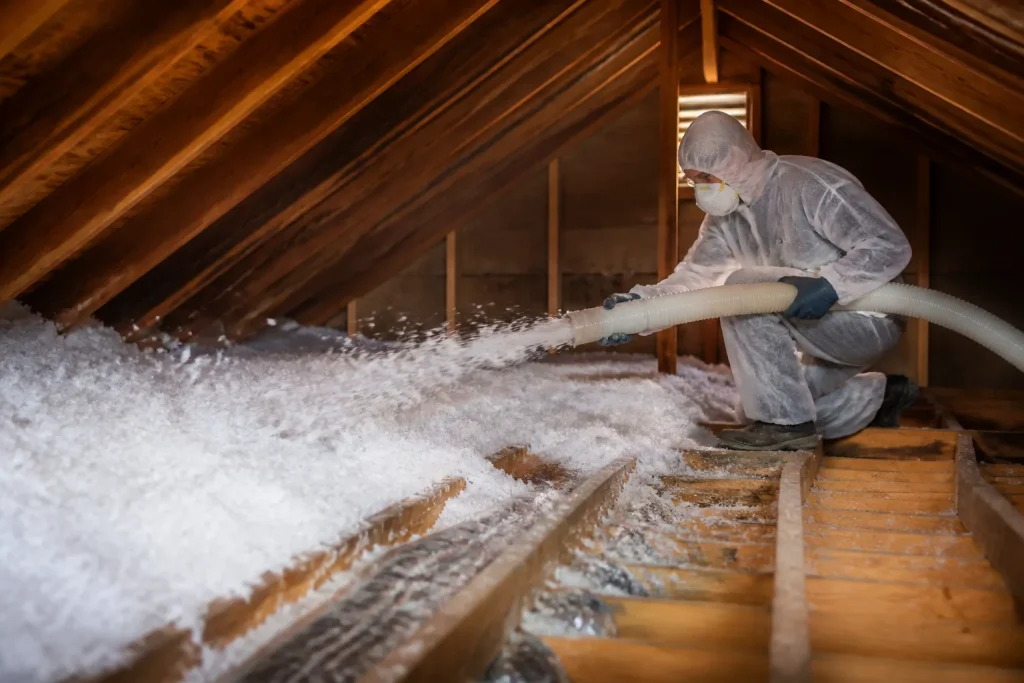
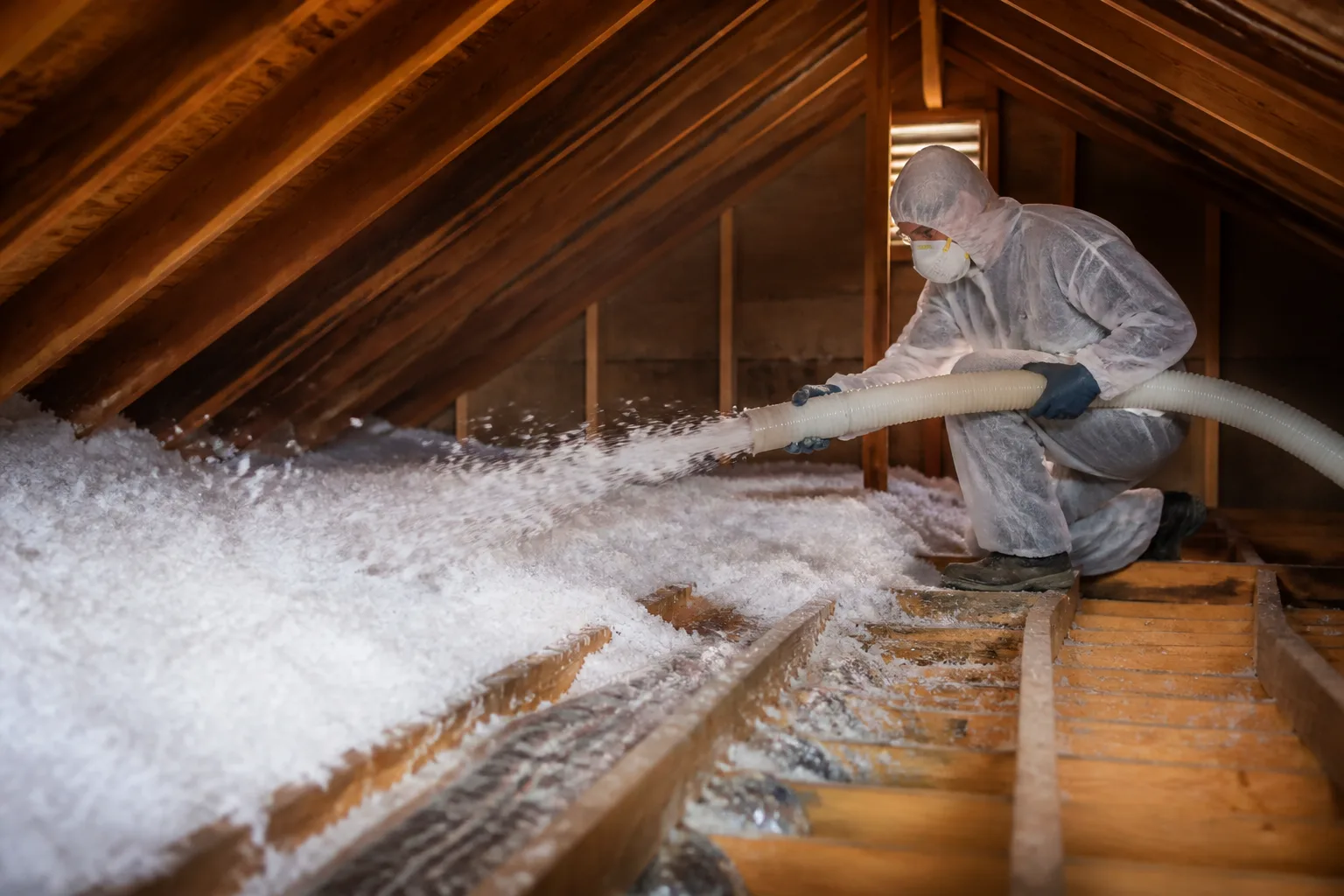
Here’s a reality most emergency contractors won’t tell you: same-day attic insulation is almost always a blown-in job. The reason is simple logistics. Blown-in insulation, whether fiberglass or cellulose, can be installed in a few hours with a truck-mounted machine and a hose. Batts take longer to fit around joists, wiring, and recessed lights. Spray foam requires temperature and humidity windows, surface prep, and curing time. You cannot get a proper spray foam install in Villa Park on 24 hours’ notice. You shouldn’t want to.
This matters because blown-in material selection matters. GreenFiber cellulose, for example, is an excellent product for Villa Park attics. It’s recycled-content, it settles predictably, and it fills odd cavities around older framing better than batts. But if someone shows up with an unbranded truck and says they’ll blow “insulation” into your attic for emergency pricing, you’re about to overpay for an unknown material at an unknown density. Ask what they’re installing. Ask the R-value per inch. Ask the settled R-value, not the blown number. The honest answers come from installers who know their products. The evasive ones come from installers who expect to be gone before you notice.
If you do go the blown-in route on a rushed timeline, a cellulose product like GreenFiber makes particular sense in Villa Park. The area’s older homes have irregular joist spacing and shallow attic cavities that cellulose fills more effectively than fiberglass batts. And cellulose’s higher installed density helps it resist the air movement that plagues older, leakier attic assemblies. It’s not the right answer for every home, but for the specific conditions common in 1960s and 1970s Villa Park construction, it’s often the best one.
Questions to Ask Any Contractor Who Shows Up Within 24 Hours
If you’ve decided the problem is real enough to warrant fast action, congratulations. You’ve done the hard thinking. Now do the fast diligence. Any contractor who arrived at your door within a day should be able to answer these four questions without hesitation.
1. “What’s the current R-value of my attic, and what will it be when you’re done?” If they haven’t looked in the attic yet, they can’t answer this. A real pro measures first and quotes second.
2. “Are you doing any air sealing with this install?” Insulation slows heat transfer. Air sealing stops conditioned air from leaking out through top plates, plumbing penetrations, and ceiling fixtures. In a Villa Park home from the 1970s, the air leaks are often a bigger comfort problem than the insulation itself. A contractor who only blows material and ignores sealing is doing half the job.
3. “What happens if I’m not happy with the depth or coverage?” Look for a specific answer: “We’ll come back and top it off.” Not a vague “we stand by our work.” Specificity is the tell.
4. “Which brand are you installing, and can I see the product data sheet?” This single question eliminates half the fly-by-night outfits. If they can’t name the manufacturer, they’re not an installer. They’re a middleman with a machine.
When the contractor answers these well, and the quote is itemized, and the warranty is in writing, a fast install can be fine. The problem isn’t speed. It’s speed without substance. We’ve fixed enough rushed jobs in Villa Park to say that with confidence. One homeowner last year called us after an “emergency” crew blew 12 inches of material across their attic without air sealing or addressing a bathroom vent that exhausted directly into the attic space. The insulation was fine. The install wasn’t. The vent had been pouring moist air into the new cellulose for months. They paid twice. Don’t be that homeowner.
The Bottom Line
Here’s what we want you to take from this. A true emergency attic insulation problem in Villa Park involves active water, exposed wiring, or a sudden structural failure. Those are rare. What you’re probably dealing with is a comfort problem that has finally crossed your threshold of tolerance during a heat wave or cold snap. That’s a completely valid reason to act. It’s just not a reason to skip diligence.
Do the three interim steps today. They cost almost nothing and help immediately. Then call two or three insulation specialists, including Meadow Insulation home, and ask the questions above. Someone who answers them well is worth waiting a few days for. Someone who can’t answer them is worth avoiding at any speed.
If you’re in Villa Park and want straight answers about whether your attic actually needs work this week or can wait until next month, we’ll tell you the truth either way. We install Owens Corning, Johns Manville, Knauf, and GreenFiber products, and we’ll recommend the one that fits your home’s structure, not the one sitting in inventory. Call (833) 589-8312 for a free estimate, and we’ll help you sort emergency from inconvenience before you spend a dollar.
Frequently Asked Questions
Most Villa Park attic insulation jobs run between $1,800 and $4,500 depending on attic size, current insulation depth, and material choice. A small targeted repair, like re-insulating a bare patch after HVAC work, can cost under $800. True emergency work, where someone comes out same-day or next-day, often carries a 15% to 25% premium. That premium may be worth it for active water damage. It’s not worth it for a bedroom that’s been warm for three summers. Call (833) 589-8312 for an exact quote. Estimates are free, and we’ll tell you if the job can wait.
You can install a foam hatch cover or add a temporary batt over an obvious bare spot. But full attic insulation, especially blown-in work, requires calibrated equipment to hit the target R-value depth. Most DIY jobs under-insulate by 30% or more because homeowners eyeball the depth instead of measuring it. For blown-in cellulose or fiberglass, a professional install with depth verification markers is the difference between the R-value you paid for and the R-value you actually got. It’s not the most dangerous DIY project, but it’s one of the easiest to do wrong without knowing it.
For most Villa Park homes, blown-in cellulose from GreenFiber or blown-in fiberglass from Owens Corning or Johns Manville provides the best balance of coverage and cost. Cellulose has a slightly higher installed density, which helps it resist air movement in older, leakier attics. If you’re air sealing at the same time, the performance difference narrows. Spray foam has a place in specific situations, like cathedral ceilings or attics with complex geometry, but it’s rarely the right first choice for a standard ventilated attic in an older Villa Park ranch. For more on spray foam, see Spray Foam Insulation in Villa Park.
A standard blown-in attic insulation job in Villa Park takes one day, and most quality contractors can schedule within one to two weeks. Same-day or next-day installs are possible for small jobs and urgent situations, but be prepared to answer the four screening questions above. If the contractor passes, fast work is fine. If they don’t, wait for someone who does. Improperly installed insulation costs more to remove and redo than the extra days of waiting ever saved you. For more on our process, see Attic Insulation in Villa Park or Blown In Insulation in Villa Park.
Written by the team at Meadow Insulation, serving Villa Park since 2016.
Need Insulation Help?
Call Meadow Insulation — licensed & insured, here with fast after-hours help in Villa Park.
(833) 589-8312