Fast, Reliable Attic Insulation Across Downey
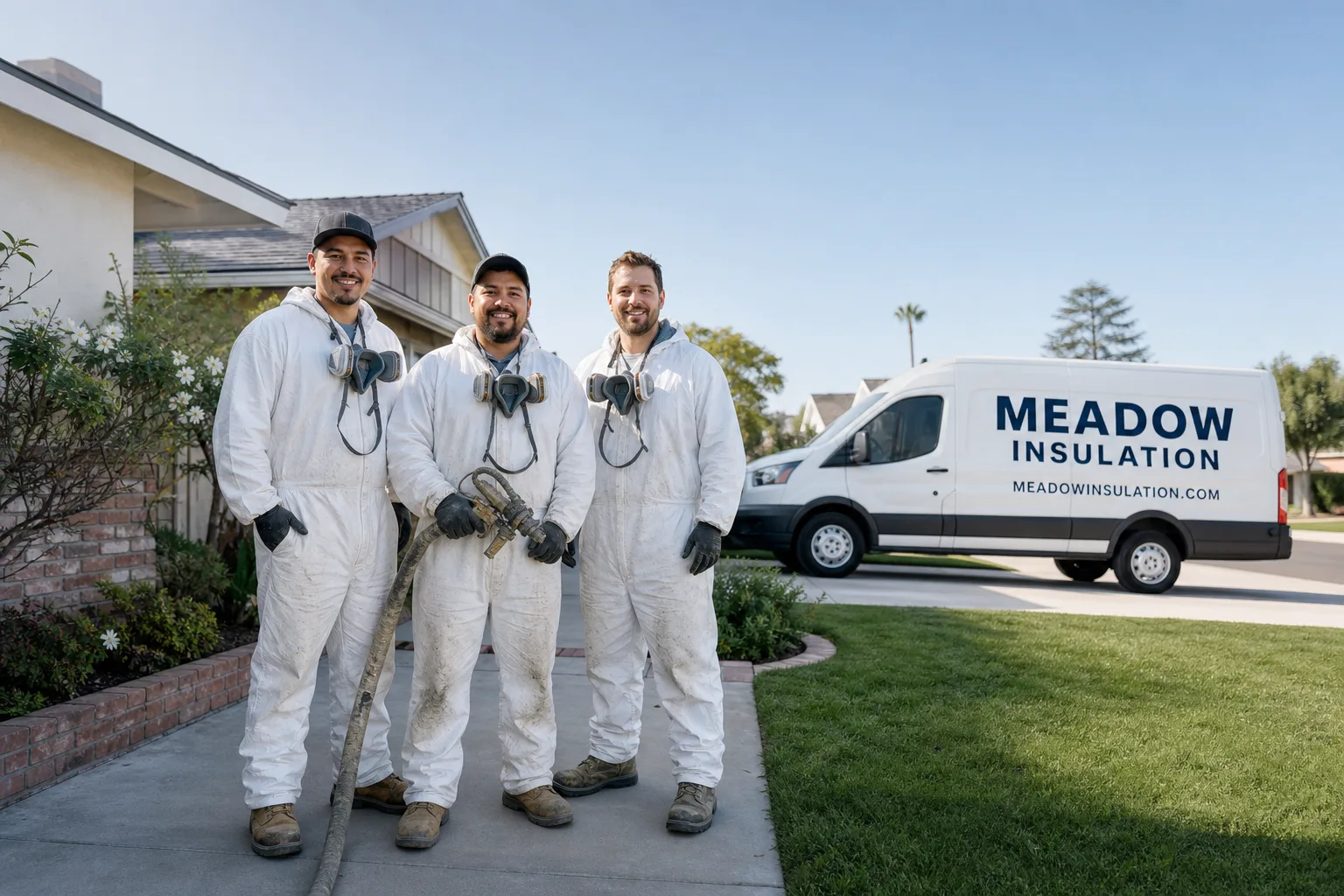
Attic insulation in Downey is rarely a simple add-on job. On most streets here, we’re restoring a 70-year-old envelope: compacted legacy batts, soffit-blocking drift, and re-roofs done without touching the attic ventilation. If your summer AC bill keeps climbing and the upstairs won’t cool, the problem is usually above your ceiling, not in the unit itself. Our crews work throughout 90239, 90240, 90241, and 90242, and we can usually have a technician at your door within a day or two. For a free attic assessment, call (833) 589-8312.
Why Meadow Insulation Is Downey’s Preferred Attic Insulation Company
We know what a mid-century Downey attic looks like before we climb the ladder. Most of the 1946-1960 tract homes in 90240 and 90241 were built with shallow, oddly framed attic spaces, low-pitch roofs, and 2×4 exterior walls with no cavity insulation. That’s not a generic attic. It’s a specific structural condition, and it changes how we approach everything from baffle placement to blown-in depth. Allen Drummond built Meadow Insulation around this kind of product-neutral, structure-first diagnosis rather than a one-size-fits-all quote.
Our Attic Insulation work across Downey has taught us one thing over and over: the home tells you what it needs if you know how to read it. We install products from eight manufacturers so we can match the material to the structure. That means fiberglass batts where they make sense, GreenFiber cellulose where a 1952 house needs coverage over an old compacted layer, and Icynene or Demilec spray foam where shallow rafter bays or kneewalls leave no room for conventional materials. You get a recommendation based on your attic, not our inventory.
We’re not a general contractor dabbling in insulation. We do three things: attic insulation, blown-in insulation, and spray foam. That focus means our Downey crews have seen every failure mode this housing stock produces, from matted cellulose choking eave vents to marine-layer moisture feeding mold on unventilated ridge lines.
Attic Cleaning Services in Downey
Attic Cleaning Services in Downey usually mean something different than they do in newer subdivisions. On a 1950s tract home, you’re not just clearing out dust and old holiday decorations. You’re removing decades of compacted, sometimes pest-damaged insulation that has stopped doing its job. In Downey, attic cleaning typically costs $1.50 to $3.00 per square foot, with most mid-century homes falling between $1,800 and $4,500 depending on attic accessibility and how much material needs to be vacuumed out.
Compacted Legacy Insulation Removal
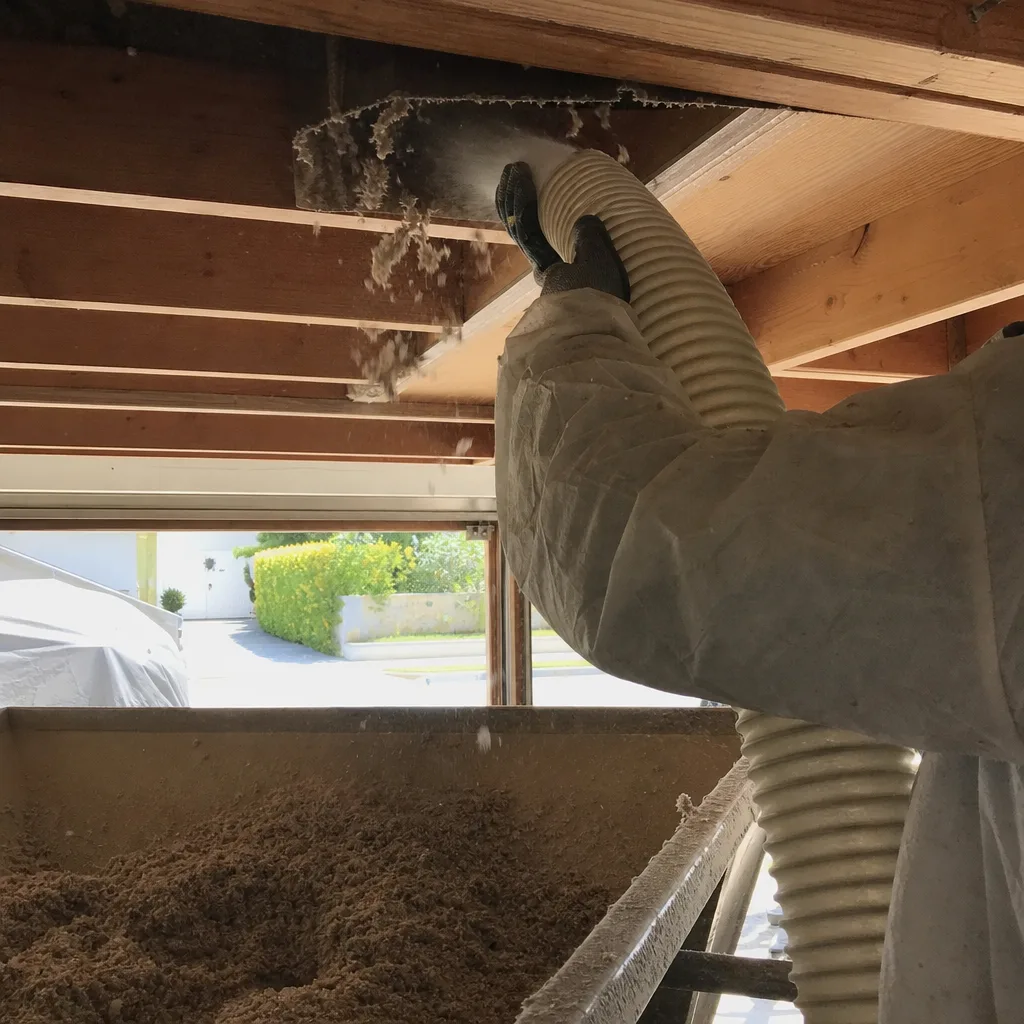
Original blown-in material from the 1940s and 50s settles to R-2 or less over time. It doesn’t get better by adding more on top. We vacuum out the degraded layer, inspect what’s underneath, and prepare the attic for a proper replacement. On homes near the old Rockwell/Aerojet employment corridors, we routinely find the original cellulose packed so tightly against the eaves that the soffit vents are completely buried.
Debris and Ventilation Path Clearing
A blocked attic doesn’t just hold heat. It holds moisture, and that moisture migrates into framing and drywall. Part of any Downey attic cleaning job is opening the ventilation path back up: clearing eave bays, checking soffit vents, and making sure the attic can actually move air the way the original builder intended.
What happens when you call
- 1
A real person answersNo phone trees — you reach a local pro.
- 2
You get an upfront price rangeHonest numbers before anyone is dispatched.
- 3
A background-checked tech heads outLicensed & insured, dispatched right away.
- 4
You approve before work beginsNothing starts until you say go.
Attic Mold Removal in Downey
Attic Mold Removal in Downey is driven by a local climate pattern that doesn’t get enough attention. The marine-layer inversion traps moisture against the low-pitch roofs of mid-century homes, and when a re-roof was done without correcting ventilation, that moisture has nowhere to go. Mold follows. In Downey, attic mold remediation typically runs $2,000 to $6,000 for a standard 1,000-1,600 sq ft tract home, with severe cases involving framing treatment and ventilation corrections pushing higher.
Moisture Source Correction
Removing mold without fixing the moisture source is a temporary patch. On a Downey attic job, that means diagnosing ventilation before we treat surfaces. Many of these homes were re-roofed in the 1980s and 90s, and the roofers changed the airflow profile without adding ridge or soffit vents. We correct that path first, then treat the mold. Otherwise, it comes back.
Framing Treatment and Surface Restoration
Once ventilation is corrected, we treat affected framing and sheathing with a mold-remediation process appropriate to the surface. On early drywall and rock-lath ceilings, we take care to address mold without over-saturating the material. The goal is a dry, stable attic that stays that way through Downey’s damp winter inversion season and its 95-100°F summers.
Trusted Brands We Service in Downey
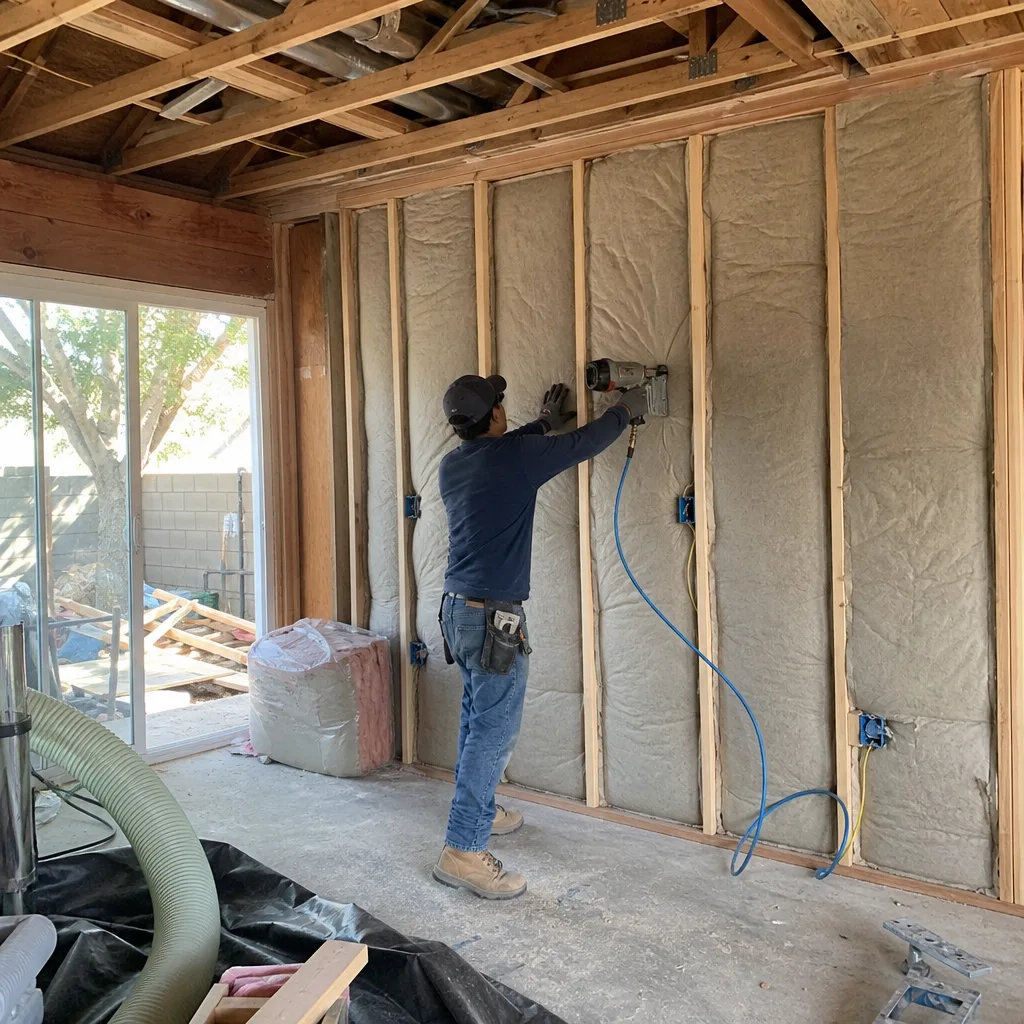
Meadow Insulation is authorized to install products from eight manufacturers, which means we’re not locked into pushing one brand on every Downey home. For a 1952 tract house with a shallow attic, we might recommend Knauf fiberglass batts for quick coverage and solid R-value. For a 90242 Rancho with kneewalls and cathedral ceilings, CertainTeed or Rockwool batts often fit the odd framing better, and Rockwool adds a fire-resistance and sound-dampening layer that fiberglass alone can’t match. For tight rafter bays where batt friction is unreliable, Icynene open-cell spray foam does the job. We keep common materials accessible for quick turnaround on Downey jobs, so you’re not waiting weeks for a specialty product.
Common Attic Insulation Problems We See in Downey Homes
- Compacted original insulation performing at R-2 or less. The blown-in material installed when these homes were built has settled into a thin, dense mat. It isn’t insulating anything anymore, and it’s often blocking the very air movement the attic needs.
- Soffit-blocking drift on the east side. Homes near the former Rockwell/Aerojet corridors typically show blown-in insulation pushed against the eaves, covering every soffit vent. Attic temps spike past 130°F by early afternoon, and the complaint is always “the AC can’t keep up.”
- Uncorrected re-roof ventilation problems. Low-pitch mid-century roofs were re-roofed decades ago without adding ridge or soffit vents. Marine-layer moisture gets trapped, and attic mold develops before insulation is ever addressed.
- Kneewall and cathedral ceiling gaps in 1960s-70s additions. The Ranch-style and two-story homes near the 90242 and 90239 edges weren’t framed like the original tracts. Odd kneewall cavities and shallow cathedral rafter bays leave thermal gaps that standard batt insulation can’t cover without air sealing and careful fitting.
Pricing for Attic Insulation in Downey, CA
Attic insulation in Downey runs a wide range because the condition of the existing attic varies so much from house to house. A straightforward attic insulation top-up on a 1,200 sq ft tract home, where the existing layer is simply underperforming but not blocking vents, typically costs $1,200 to $2,500. A full removal and replacement, where we vacuum out compacted legacy material and start fresh, runs $3,000 to $7,000 depending on attic accessibility and material choice. Attic baffles and ventilation prep add $400 to $1,200 when soffit or ridge corrections are needed. Blown-in GreenFiber cellulose installation in Downey averages $1.50 to $3.00 per square foot installed. Spray foam runs higher: open-cell Icynene typically costs $2.50 to $4.50 per board foot, while closed-cell Demilec ranges $3.50 to $6.00 per board foot. Call (833) 589-8312 for a free estimate based on your attic, not a generic square-foot multiplier.
We Also Serve Cities Near Downey
Meadow Insulation works throughout the surrounding area, including Bell Gardens, Santa Fe Springs, Paramount, and Pico Rivera. If you’re in one of these neighboring cities and need attic insulation looked at, our Downey crews can usually extend service there on the same schedule. Call (833) 589-8312 to confirm coverage in your area.
Serving Downey, CA — Our Local Coverage Area
We’re based in the Downey area and know this community well. Use the map below to see our service coverage — if you’re nearby, we can almost certainly help.
FAQs About Attic Insulation in Downey
No. Adding new insulation directly over a compacted, decades-old layer is the single most common mistake we see in Downey attics. The old material has settled into a dense mat that blocks air movement and holds moisture against the ceiling framing. Any new insulation you add on top just traps the problem underneath it. The correct approach is to remove the compacted layer, clear the eave bays and soffit vents, and then install new material to the proper depth for your roof configuration. In a 90241 tract home, that usually means a full removal and replacement rather than a top-up. Call (833) 589-8312 for an attic assessment and we’ll tell you what your specific roof needs.
Because the attic is likely running 130°F or hotter, and that heat radiates down through your ceiling faster than your AC can remove it. In Downey’s eastern tracts, the most common cause is blown-in insulation that has drifted against the eaves and completely blocked the soffit vents. The attic can’t exhaust hot air, so the entire ceiling plane becomes a radiant heater. The fix is clearing the blocked vents, installing baffles, and correcting the ventilation path before adding new insulation. On a 1952 stucco-and-wood-frame tract home off the 90241 side, our crew found exactly this: original cellulose matted into every eave bay, soffits buried, attic temps spiking past 130°F by early afternoon. We vacuumed out the blocked bays, baffled the soffits, corrected the ventilation the prior re-roof had left untouched, and blew in GreenFiber over the compacted legacy layer. The “AC can’t keep up” complaint disappeared within the first hot week. If your attic is doing the same thing, call (833) 589-8312.
Yes, and it’s more common here than most homeowners realize. Downey sits on the inland edge of the LA Basin where the marine-layer inversion traps moisture against low-pitch mid-century roofs at night and during the winter. If the roof was re-shingled without adding or correcting ventilation, that moisture condenses on the underside of the sheathing and feeds mold growth. We see this most often in 1940s-50s tract homes that were re-roofed in the 1980s and 90s. Attic mold removal won’t last unless the ventilation path is corrected first. Call (833) 589-8312 for a moisture and mold assessment specific to your Downey roof.
Yes, but it requires a different approach than a standard vented attic. Cathedral ceilings and kneewalls don’t have the same open cavity space as a conventional attic, so the material has to be chosen for the framing reality. Icynene open-cell spray foam often works well in tight rafter bays where batt friction is unreliable. Rockwool batts can handle kneewall cavities while adding fire resistance and sound dampening. The key is air sealing first: on a Downey Rancho-style home, the kneewall and cathedral transitions are usually where the thermal gaps hide. Call (833) 589-8312 and we’ll evaluate your 90242 framing before recommending a material.
We install fiberglass batts from Knauf, Johns Manville, and CertainTeed; mineral wool from Rockwool; blown-in cellulose from GreenFiber; and spray foam from Icynene and Demilec in both open-cell and closed-cell formulations. The material depends on your attic. A standard vented tract attic with good access might do best with blown-in cellulose. A shallow, oddly framed attic with tight rafter bays might need open-cell spray foam. A kneewall or cathedral ceiling might call for Rockwool or closed-cell foam. We’re not locked into one manufacturer, so the recommendation is driven by your home’s structure, not our inventory. Call (833) 589-8312 for a free estimate and we’ll show you exactly which material fits your Downey attic and why.
Written by Allen Drummond, Owner at Meadow Insulation, serving Downey and the surrounding LA Basin communities.