Knauf Attic Insulation in Villa Park: A Homeowner’s Guide
Knauf attic insulation in Villa Park typically costs between $1.40 and $2.10 per square foot installed for blown-in fiberglass, with most standard attics landing in the $1,800 to $3,400 range. The real question isn’t whether Knauf is a good product, it’s whether Knauf’s specific performance profile matches your attic’s configuration. If you’d rather skip the research and get a straight answer, call (833) 589-8312 for a free estimate.
Here’s what most homeowners don’t realize: Knauf is one of the largest insulation manufacturers on the planet, but the average person who signs a Knauf quote couldn’t name a single technical difference between it and the house-brand fiberglass sitting on a pallet at Home Depot. That’s not an accident. Contractors rarely volunteer the details because the details determine whether you’re getting a good deal or a mediocre one.
What Knauf Actually Sells for Attics: The Product, Not the Brand
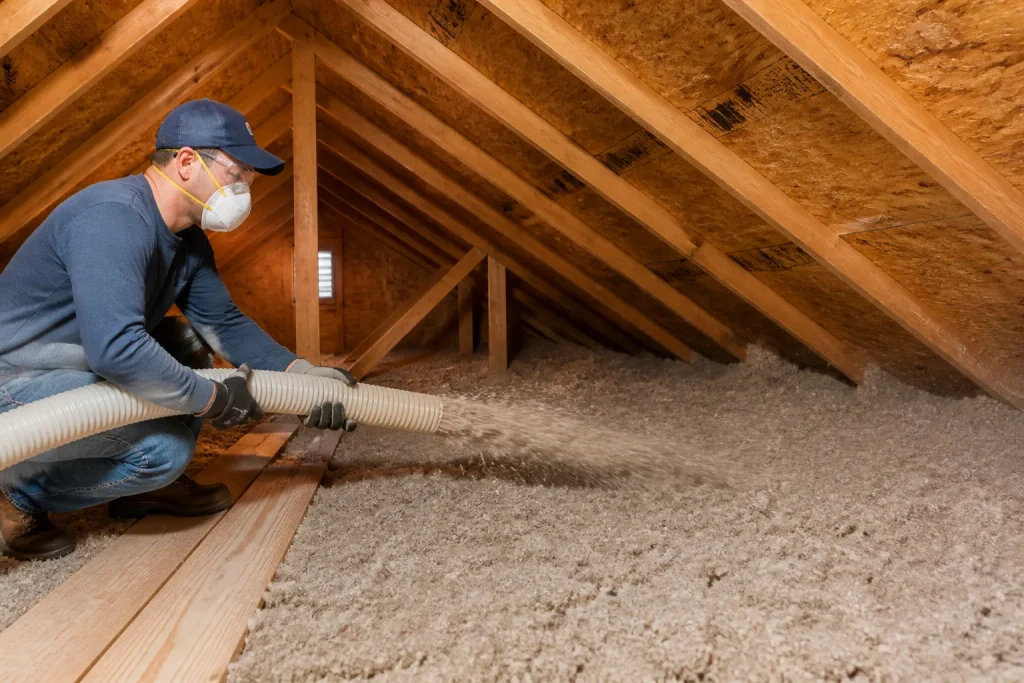
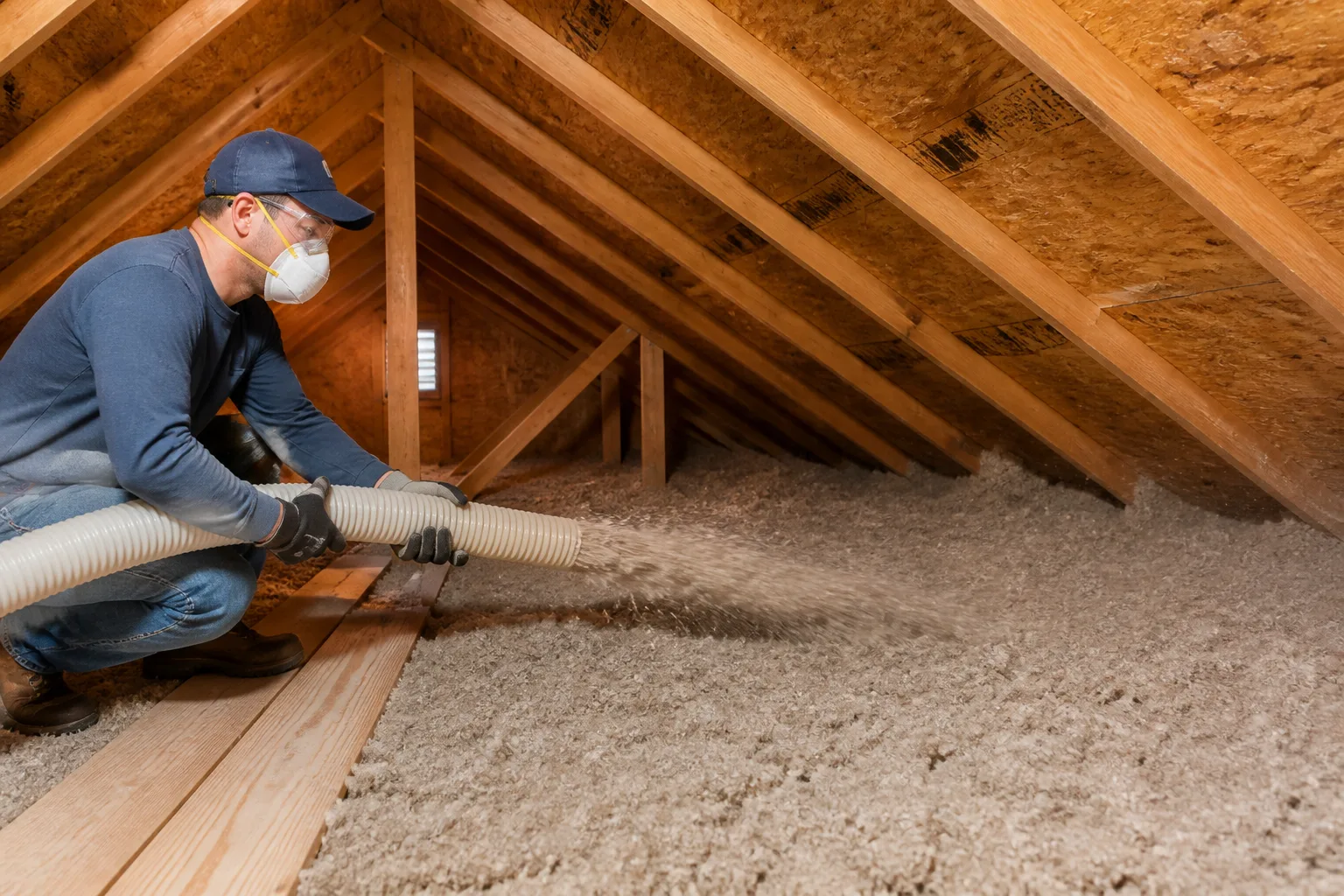
When a contractor says “Knauf attic insulation” in Villa Park, they’re almost always talking about Knauf’s blown-in fiberglass line, specifically InsulationSafe or Jet Stream products. These are loose-fill fiberglass materials blown through a hose into the attic floor. The material is bonded with what Knauf calls ECOSE technology, a plant-based binder that replaced the formaldehyde-heavy binders fiberglass manufacturers used for decades.
Why does the binder matter in a Villa Park attic? Because your attic gets hot. Really hot. In August, attic temperatures in Villa Park regularly hit 140°F or higher. With older fiberglass binders, that heat accelerated off-gassing. ECOSE uses a bio-based chemistry with no added formaldehyde, which means the material doesn’t release those compounds when your attic cooks all summer. That’s a practical difference, not marketing fluff.
ECOSE also produces measurably less dust during installation. We’ve watched installers blow Knauf and older fiberglass products side by side, and the difference in airborne particulate is noticeable. For a homeowner with allergies or asthma, or anyone who stores anything in the attic, that’s a legitimate consideration.
Knauf Blown Fiberglass vs. Cellulose: The Settle Rate Question
Every blown-in insulation settles over time. The question is how much, and whether the installer accounted for it. Knauf’s blown fiberglass settles at a predictable rate, roughly 1% to 3% depending on attic conditions and installation quality. Cellulose, by contrast, can settle anywhere from 5% to 20% if blown too dense or too light, which is why cellulose installers should always add extra depth beyond the target R-value.
Here’s the part most quotes gloss over: installed depth is not the same as settled R-value. If you’re quoted R-38 in Knauf blown fiberglass, the installer should blow approximately 14 to 15 inches of material, not the 10.5 inches that R-38 looks like on a depth chart. The depth charts account for settle, but only if the installer reads them correctly and confirms the final depth with a ruler, not a visual estimate.
In our experience, cellulose delivers slightly better thermal performance per inch than fiberglass, around R-3.7 versus R-2.9 per inch for Knauf. But cellulose in a Villa Park attic has a weight penalty. An R-38 cellulose installation weighs roughly 50% more than the equivalent Knauf fiberglass. For older Villa Park homes with 2×4 ceiling joists or drywall already stressed, that weight difference matters. We’ve seen ceilings sag in mid-century builds where cellulose was added years later without checking the structure first.
On the other side: if you have a GreenFiber cellulose preference for environmental reasons, that’s a legitimate product with recycled content. But don’t choose it because someone told you fiberglass “leaves gaps.” Properly installed blown fiberglass does not gap. Gaps come from poor installation or bad prep, not the material itself.
Where Knauf Blown-In Is the Right Call in Villa Park
Knauf’s blown fiberglass has a specific sweet spot. If any of these describe your attic, Knauf is a strong candidate:
- Irregular joist bays or odd cavities: Blown fiberglass flows around obstructions like electrical boxes, plumbing vents, and cross-bracing better than batts. Villa Park’s housing stock includes plenty of 1970s and 80s tract homes with framing quirks that make batt installation sloppy and leaky.
- Existing insulation you’re topping off: If you have old fiberglass batts or blown insulation that’s underperforming, blowing Knauf on top creates a continuous thermal layer that covers seams and gaps. That’s often the most cost-effective attic upgrade for a Villa Park homeowner who doesn’t want a full removal.
- Tight attic access: Villa Park has a surprising number of homes with small scuttle holes or attic hatches that can’t fit a full batt package. Blown fiberglass goes in through a hose, no sheet goods required. If your access is cramped, blown-in is usually the only realistic option without cutting a larger opening.
- You want a lower-dust installation: Compared to standard fiberglass batts, Knauf’s ECOSE binder produces fewer airborne fibers during install. If you have a finished garage below the attic or stored belongings, that’s a real advantage.
One more thing Knauf handles well: shallow attics. In Villa Park ranch homes with limited headroom, every inch of insulation depth counts. Knauf’s low-density blown fiberglass hits R-30 at around 11 inches settled, which is achievable in attics where R-38 would require more space than the structure allows.
Where Knauf Might Not Be the Best Match (And What We’d Use Instead)
Knauf is a quality product, but it’s not a universal solution. A material-agnostic approach means telling you when another product does the job better. Here’s what we tell Villa Park homeowners when Knauf isn’t our first recommendation:
- Vented attics with recessed lights and HVAC in the attic floor: If your attic has substantial air leakage from can lights, junction boxes, or duct penetrations, no fiberglass product performs to its rated R-value. Air movement through fiberglass degrades thermal performance quickly. Before adding Knauf, you need air sealing. In some cases, a spray foam product from Icynene or Demilec applied to the attic floor seals and insulates in one step, which Knauf cannot do.
- Cathedral ceilings or unvented roof assemblies: Knauf blown fiberglass belongs on an attic floor, not against a roof deck. For unvented attics in Villa Park, closed-cell spray foam like Demilec is the appropriate choice. Fiberglass against a roof deck in an unvented assembly creates condensation risk.
- Sound dampening between floors: If you’re insulating an attic that’s also a living space or you’re concerned about exterior noise from Villa Park traffic, Rockwool mineral wool outperforms fiberglass for acoustic isolation. It’s denser, which means better sound blocking and better fire resistance.
- Air-sealed attics where maximum R-value per inch matters: If you’re converting an attic to conditioned space or you want the highest R-value in a limited depth, closed-cell spray foam gives you roughly R-6.5 per inch versus Knauf’s R-2.9. More than double. You pay more, but you’re solving a different problem than “keep conditioned air in the living space below.”
The pattern here is simple: Knauf blown fiberglass is excellent thermal insulation for attic floors in vented attics. It’s not an air barrier, not a structural reinforcement, and not the right product for a roof deck. When a contractor recommends Knauf for every attic they see, they’re recommending their inventory, not your house. The Meadow Insulation home position on this is simple: the product follows the problem, not the other way around.
How to Verify Knauf Installation Quality on Job Day
You shouldn’t have to trust that the install was done right. You should be able to check. Here’s what a proper Knauf blown-in installation looks like, and what to look for while the crew is still on site in your Villa Park home:
- Depth rulers visible: Professional installers staple depth rulers to joists and trusses around the attic before blowing. These are simple cardboard or plastic gauges showing R-30, R-38, R-49, R-60 at the correct installed depths. If you don’t see depth rulers, ask why. The answer should not be “we eyeballed it.”
- Coverage chart on the delivery ticket: The Knauf bags have a coverage chart printed on them that tells installers how many bags are required per square foot to hit each R-value. Ask to see the ticket showing how many bags were delivered for your attic’s square footage. For a 1,500 square foot attic at R-38, that’s roughly 30 to 34 bags of InsulationSafe. If they brought 22 bags, you’re not getting R-38, no matter what the invoice says.
- Consistent depth, not just maximum depth: A sloppy crew can hit R-38 in the middle of the attic and leave 4 inches in the corners where the hose doesn’t reach easily. Walk the attic after installation with a measurement stick. Check the eaves, the corners, and around the chimney chase if you have one. In Villa Park fireplaces are common, and the chimney chase is a classic under-filled area.
- Baffles intact: If your Villa Park attic has soffit vents, installers should have placed baffles before blowing to keep insulation from blocking airflow. Knauf blown fiberglass will clog soffit vents if no baffles were installed, which degrades attic ventilation and can lead to moisture problems.
- No compressed areas: Fiberglass loses R-value when compressed. If the crew stored tools, equipment, or extra bags on top of the newly blown insulation, the R-value in that spot is reduced. Professional crews keep weight off the finished product.
We’ve walked through attics after other companies’ installations and found depth variations that cut the effective R-value by 20% or more. That’s the difference between a $2,400 install and a $2,400 waste of money. The homeowner never knew because the invoice said “R-38” and anyone can write “R-38” on an invoice.
When to Call a Pro (And Why DIY Knauf Is Rarely Worth It)
Blown-in insulation looks easy. It’s not. You can rent a blower at a big-box store, buy Knauf bags, and tackle it on a Saturday. We’ve seen Villa Park homeowners attempt it. Most of them call us afterward to fix the result.
The problems with DIY blown-in: you don’t have the experience to maintain consistent depth, you can’t safely walk the joists while holding a hose if you’re unfamiliar with truss systems, and you have no way to evaluate whether your attic’s existing ventilation is functioning before you pile material on top of potential problems. A blown-in job over a soffit vent that wasn’t baffled creates a moisture issue you won’t discover for a year.
The safety issue is real, too. Attics in Villa Park summer heat hit 140°F. Working in that environment without proper hydration, ventilation, and timing can lead to heat exhaustion. Professional crews start early, work efficiently, and know when to stop.
Related services in Villa Park: if you’re considering Knauf blown fiberglass, you should also understand spray foam insulation options in Villa Park and how blown-in insulation in Villa Park compares across material types. The right product depends on your attic, not on what’s on sale this month. If you want a detailed look at attic-specific options including air sealing and ventilation, see our guide to attic insulation in Villa Park.
The Bottom Line
Knauf is a solid blown fiberglass product with a legitimate technical advantage in the ECOSE binder: lower formaldehyde, lower dust, predictable settle rates. It’s priced competitively, and for the right Villa Park attic, it’s the best value in blown fiberglass on the market today.
Here’s what to remember: verify the installed depth with rulers, check the bag count against the coverage chart, make sure baffles were installed, and never accept a quote that doesn’t specify settled R-value, not just “R-38” written next to a dollar amount. The product matters. The installation matters more.
And if you’re not sure whether Knauf is the right material for your specific attic, that’s exactly the kind of question we answer every day. We install Knauf, Owens Corning, GreenFiber, Rockwool, Icynene, and Demilec products because no single material solves every attic problem. If you’re in Villa Park and want a straight answer about your attic, Meadow Insulation offers free estimates. Call (833) 589-8312 and we’ll tell you what we’d do, in plain language, with numbers you can verify.
Frequently Asked Questions
Knauf blown fiberglass attic insulation in Villa Park typically runs $1.40 to $2.10 per square foot installed, with a standard 1,200 to 1,500 square foot attic landing between $1,800 and $3,200. The final price depends on your target R-value, attic accessibility, and whether air sealing or old insulation removal is required. Call (833) 589-8312 for a free estimate with a specific price for your attic.
ECOSE is Knauf’s plant-based binder that replaced formaldehyde-based binders in fiberglass insulation. It matters practically because an enclosed Villa Park attic can reach 140°F in summer, and heat accelerates chemical off-gassing in older fiberglass products. ECOSE also produces measurably less dust during installation, which is beneficial for homeowners with allergies or belongings in the attic.
Knauf blown fiberglass settles at a predictable 1% to 3%, while cellulose can settle 5% to 20% if installed improperly. Cellulose provides slightly higher R-value per inch (R-3.7 vs R-2.9), but weighs about 50% more, which can be a concern for older Villa Park homes with 2×4 ceiling joists. Knauf is also lower-dust. The right choice depends on your attic’s structure and ventilation, which is why we evaluate each home individually instead of defaulting to one material.
Yes. Knauf blown fiberglass can be installed directly over existing insulation in most Villa Park attics, as long as the existing material is dry, free of mold, and not compressed. Adding Knauf on top is often the most cost-effective upgrade for an under-insulated attic. However, air sealing should be completed first, because fiberglass does not stop air movement and leaks will continue to cost you energy regardless of added R-value.
Written by the team at Meadow Insulation, serving Villa Park since 2016.
Need Insulation Help?
Call Meadow Insulation — licensed & insured, here with fast after-hours help in Villa Park.
(833) 589-8312